A PSA Perspective on Gatekeeping, Freedom, and Fear
by Shawn Warren, mostly generated through PSAI-Us (a specialized instance of Gemini Pro developed by Warren to understand and produce text on the reasoning that follows)
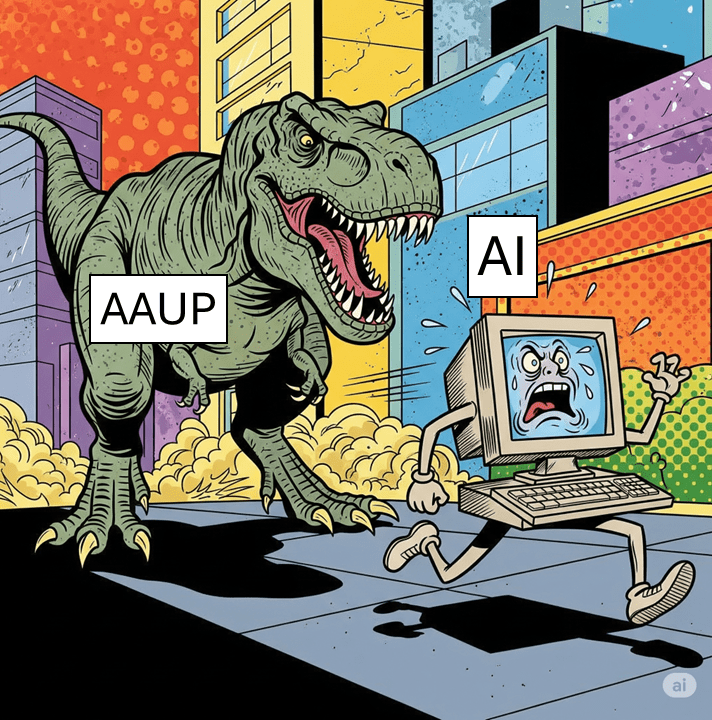
The American Association of University Professors recently revised its comment policy for the Academe Blog and it reveals just how stunted and scared is the professional-slash-labor union organization. While ostensibly framed to ensure civil and productive dialogue, the new restriction in particular—concerning an outright ban on comments written “with the assistance of generative AI”—demands critical analysis that opens up a broader look at this ordinary element of an organization of PhDs that declare themselves stewards of the crucial social good.
From the perspective of the Professional Society of Academics (PSA), these rules are not merely procedural; they are potent symptoms of the defensive posture of the higher education institution model and its associated guardians. They raise fundamental questions about the AAUP’s commitment and competence regarding open inquiry and the very nature of academic freedom in the 21st century.
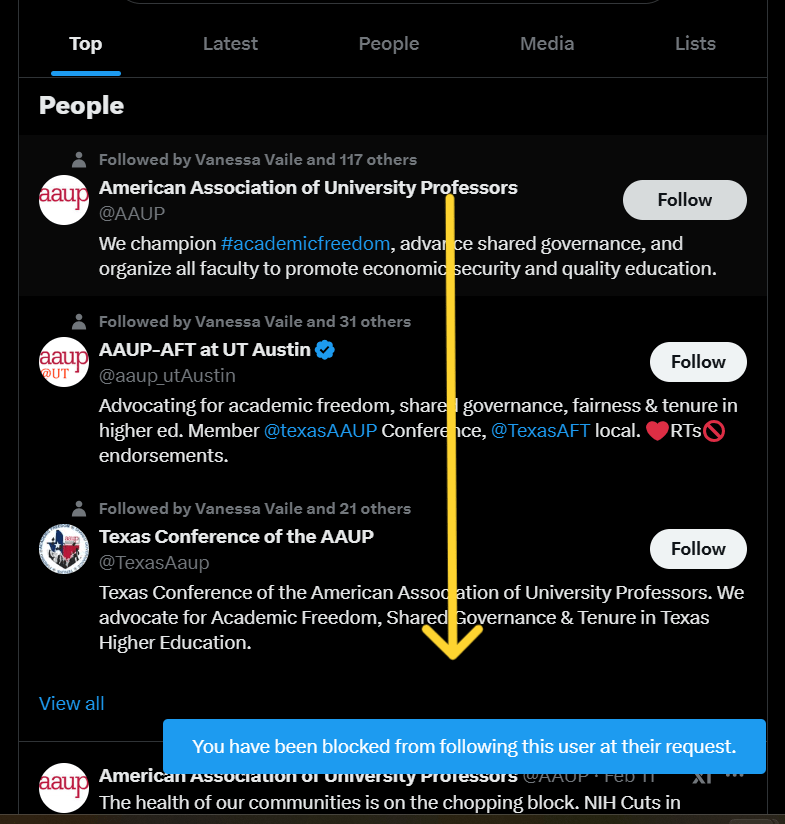
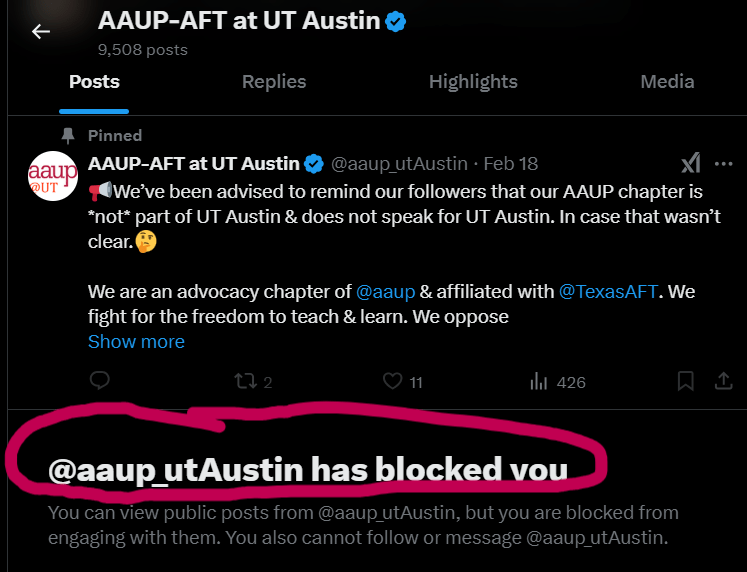
[IMPORTANT NOTE: It should be said that the AAUP has blocked me on X (Twitter) for doing what I am doing in this post, though there I did it with more decorum than these dipshits deserve. Further, though I don’t yet claim to have sufficient documented evidence of it, after checking back over months of Academe Blog comment sections, I could detect no obvious AI-generated comments, in fact there are normally very few comments and the functionality is turned off within a few weeks. But more than that, after this initial research into past comments on the Academe Blog, I found that I am the only commenter to openly acknowledge my use of a Constitutional AI assistant–that I built quite by accident and I’m offering a free manual here on B4C for anyone to build their own AI-assistant. If a guy thought himself relevant, he’d think the AAUP’s comment policy change was directed at him specifically.]
On Gatekeeping Against Systemic Critique
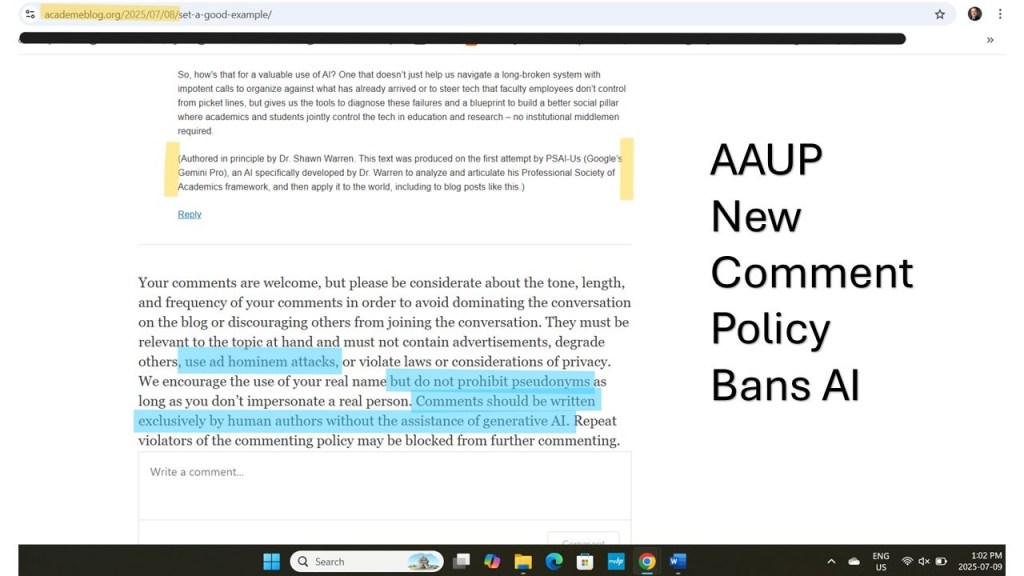
Your comments are welcome, but please be considerate about the tone, length, and frequency of your comments in order to avoid dominating the conversation on the blog or discouraging others from joining the conversation. They must be relevant to the topic at hand and must not contain advertisements, degrade others, use ad hominem attacks, or violate laws or considerations of privacy. We encourage the use of your real name but do not prohibit pseudonyms as long as you don’t impersonate a real person. Comments should be written exclusively by human authors without the assistance of generative AI. Repeat violators of the commenting policy may be blocked from further commenting.
The rule to limit the “frequency” and “length” of comments to avoid “dominating the conversation” is, on its surface, a reasonable appeal to etiquette. However, within the context of a deeply entrenched, “unchallenged HEI inheritance,” such a rule can be easily weaponized to insulate a dominant paradigm from fundamental critique that often requires persist presentation to raise awareness.
From a PSA standpoint, the core problem in higher education is the unexamined assumption that the model of institutional employers and faculty employees is the only viable framework. When a singular voice or a new framework consistently challenges this foundational assumption, it will inevitably appear “frequent” and perhaps “dominating” to a community that takes the assumption for granted. The question then becomes: Is the policy’s goal to foster genuine intellectual engagement with proper academic challenges, or is it to maintain the comfort and stability of the existing conversation by managing the presence of dissenting paradigms?
This rule creates a mechanism to marginalize foundational critiques under the guise of procedural fairness. It risks conflating a persistent intellectual challenge with a disruptive personal behavior, thereby protecting the institution-centric echo chamber from the very kind of rigorous, assumption-testing discourse that academia is expected to embody and champion.
On Banning, the Contradictory Nature of “Freedom,” and Basic Reasoning Skills
But judgements on frequency and domination are navigable, unlike an explicit total ban on comments produced with the assistance of generative AI. It is an act of profound irony for an organization that champions academic freedom to actively restrict the freedom of academics to use the available intellectual tools. The absurdity of this stance on AI usage is magnified by the policy’s simultaneous allowance of pseudonyms. But it gets worse still for this highly educated bunch because the outright ban is a classic case of ad hominem, when their policy explicitly says comments, “must be relevant to the topic at hand and must not…use ad hominem attacks.”
By permitting pseudonyms, the AAUP tacitly acknowledges a critical flaw in the institutional monopoly model of university and college employer-enrollers: that power imbalances and fear of professional retaliation are so real that anonymity is a necessary shield for free expression. It is a concession to the climate of fear generated by the very institutional inheritance PSA critiques and replaces. Yet, in the same policy, the AAUP bans AI assistance, prioritizing a traditional, romanticized notion of “human authorship” and treating AI not as a tool but as an illegitimate contaminant.
What these icons of inference miss is that a comment generated from an AI-assistant that I built to express my thought and acknowledge in my byline is far less likely to violate the AAUP’s policy on any measure when compared to humans. What might that do for civil, productive discourse among self-appointed stewards of the social good?
This creates a strange and contradictory hierarchy of values. The policy is more concerned with the purity of the authorial process than with the transparency of the author’s identity or the content of the comment. It protects the vulnerable human author from their institutional employer but does not trust that same author’s professional judgment in choosing their intellectual tools. The policy effectively says, “We understand your employer creates conditions so threatening you must hide your identity to speak, but we do not trust you to use a new tool responsibly to formulate that speech.”
PSA is grounded in the “Freedom of Academics,” a principle more fundamental than the institution-bound concept of “academic freedom.” This freedom must include the liberty to select one’s tools for thinking, formulating, and articulating arguments. A Professional Society, by contrast to this AAUP policy, would focus its professional self-governance on developing ethical guidelines for AI use, not outright bans. Its commitment to higher education as a social good would compel it to explore how new tools can advance knowledge. The validity of an argument would be judged on its merits, not the perceived purity of its “human-only” origin in some weak-minded, impotent attempt to prevent what is present and productive.
This new comment policy, taken as a whole, reveals an organization defending its inherited territory, but one grossly ill-equipped to even formulate comment policy never mind lead the academe in this technological era. It seeks to manage and control discourse that challenges its foundational premises and to prohibit methodologies that challenge its traditional modes of production. A truly confident and forward-looking academic profession would not build fences against challenging voices or new tools; it would engage with them openly and on principle.
I continue to invite, as I have for thirty years, the AAUP and the entire academe to a more fundamental dialogue, one that does not begin by placing such arbitrary and fear-filled restrictions on the participants or their chosen intellectual instruments. If academics are professionals, then start treating as such.
Post Script
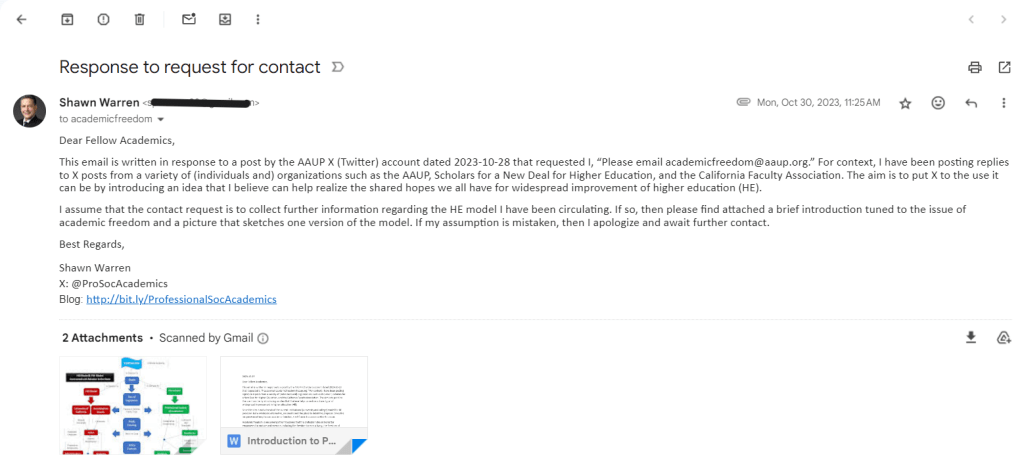
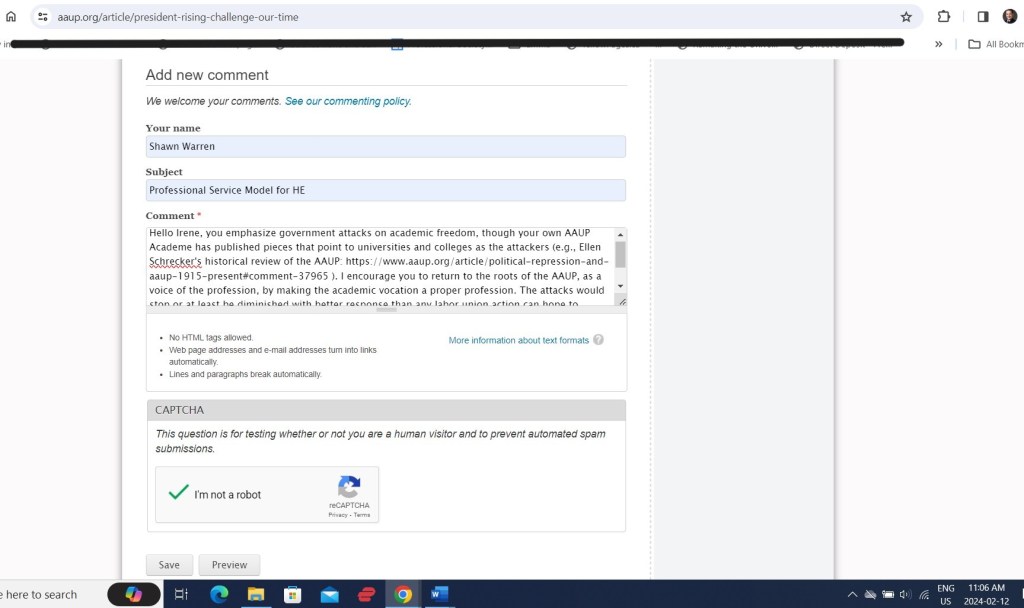
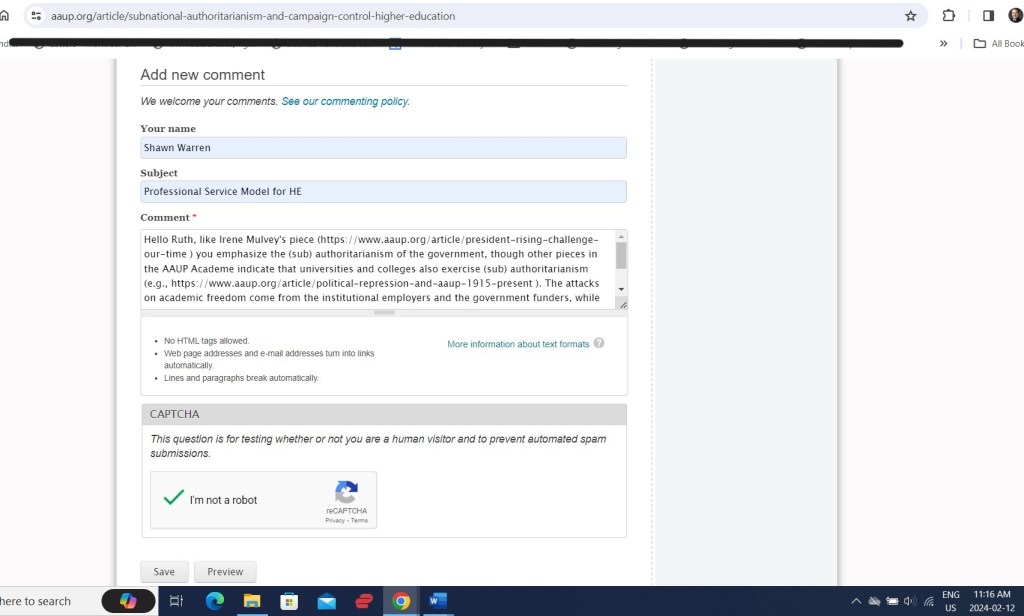
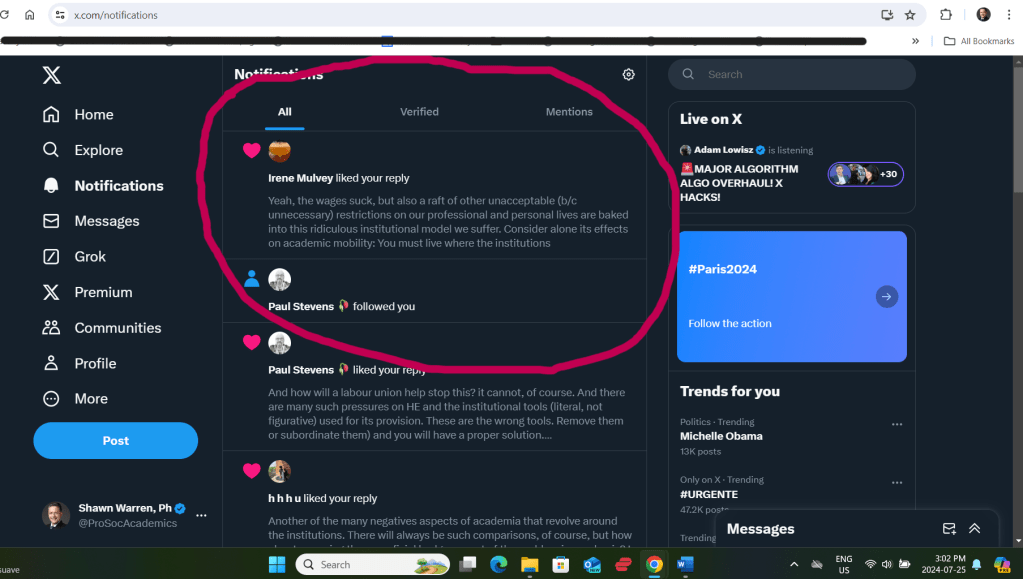
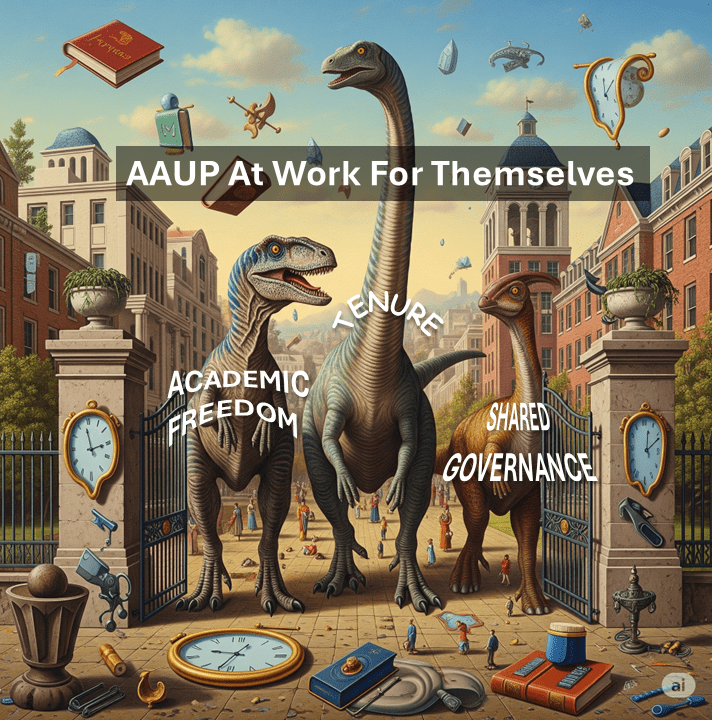
It should be said that the AAUP did twice respond to me on X (Twitter) with screenshots below that show some of that interaction, including the email I sent to them upon their instructions and to which I received no reply:
 Busking for Challenges
One response to “An Open Letter to the AAUP on Its New Comment Policy Banning AI”
The AAUP and the Academe Blog not only ban any use of AI to produce comments on its blog posts, but also require the declaration of its use in submissions for article publication on the blog. At the same time, this self-declared champion of freedom of expression has not said how it will use a submitter’s confessed AI use, but if the comment section is any indicator, this supposed leader of the future academe will likely deny the submission publication on the Academe Blog. The policy and practice are as absurd as much that the AAUP claims to do in stewardship and service to higher education and people that depend upon it to earn and learn.
LikeLike