
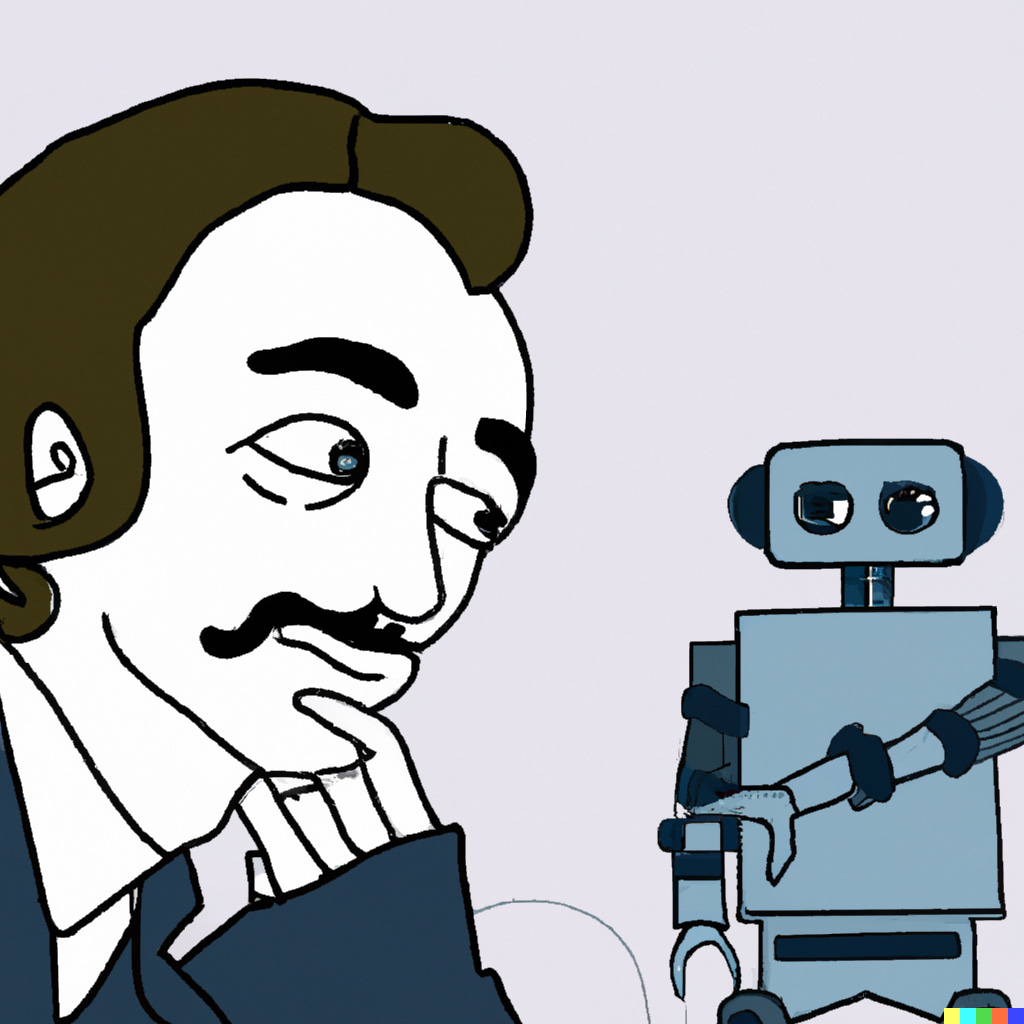
A Failure to Launch
In our “Office Hours” dialogue series, we deconstructed one of the most famous arguments in history: René Descartes’s “I think, therefore I am.” We argued that his own Dream Argument, far from being a prelude to the Cogito, actually makes it impossible. The argument is complex and sprawling, so here is a concise “field guide” to its core logic, including a textual summary, a table of objections and replies, a formal analysis, and a reading list for those who wish to explore the deeper philosophical currents that inform this critique. Here are links to each installment in the series: Part One, Part Two, Part Three.
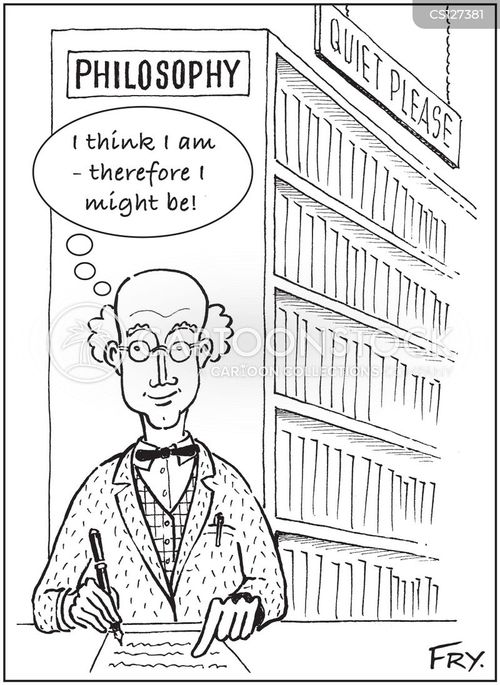
1. The Textual Summary: The Argument Step-by-Step
The “Dilemma of the Dreamer” (DoD) is a reductio ad absurdum of the Cartesian project. It shows that Descartes is caught in an inescapable dilemma regarding the nature of the dreaming self.
- The Starting Point: The Dream Argument (DA)
- Descartes argues that we cannot be certain we are not dreaming right now, because the experience of dreaming can be perfectly indistinguishable from waking life.
- This is his primary tool for generating radical doubt about the reliability of his senses and the external world.
- The Dilemma: Is the “I” in the Dream?
- For the DA to work, Descartes must take a position: is the unified, agentic “I” present in the dream, or is it not?
- Horn 1: Assume the “I” IS Present in the Dream.
- If the same agentic self is present, this leads to a three-part collapse:
- Moral Absurdity: The distinction between real and dream actions disappears. We become morally and legally responsible for our “dream crimes.”
- Epistemological Self-Defeat: The DA loses its power. If the dream state is just another venue for the same “I” to have the same kind of thoughts, the crucial contrast between a “real” and “unreal” state is erased.
- Methodological Collapse: The claim that the “I” is always present is an unfalsifiable, dogmatic assertion that violates the rules of radical doubt.
- Horn 2: Assume the “I” IS NOT Present in the Dream.
- This leads to a more fundamental problem based on a metaphysical necessity:
- The Experience-Experiencer Lock: An experience requires an experiencer. There are no “free-floating” thoughts or sensations.
- The Empty Theater: If no unified “I” is present in the dream to be the experiencer, then no experience could have occurred.
- The Ghostly Script: The “memory” of a dream is therefore not a memory at all, but a narrative of unknown origin that appears in the mind upon waking.
- The Final Conclusion: A “Failure to Launch”
- Since the DA makes it impossible to be certain that our present conscious state is not a dream, we cannot be certain it is not an “I-less” process.
- The premise “I think” is therefore not indubitable. The most Descartes is left with is the bare, impersonal possibility that “processing is occurring.”
- From this radically uncertain premise, “ergo sum” does not follow. The entire foundationalist project fails to get off the ground.

2. The Argument in a Table: Objections & Replies
| The Argument / Objection | The DoD Reply / Consequence |
| Descartes’s Starting Point: The Dream Argument (DA) makes knowledge of the external world uncertain. | The Cogito (“I think, therefore I am”) is offered as the one indubitable truth that survives this doubt. |
| The Core Dilemma: Is the unified, agentic “I” present in the dream or not? | Either answer leads to the collapse of the Cartesian project. |
| HORN 1: The “I” IS Present in the Dream. | This position is untenable, as it leads to a three-part collapse: 1. Moral Absurdity: We become responsible for our “dream crimes.” 2. Epistemological Self-Defeat: The DA loses its power because the contrast between a “real” and “unreal” state is erased. 3. Methodological Collapse: The claim becomes an unfalsifiable, dogmatic assertion that violates the rules of radical doubt. |
| HORN 2: The “I” IS NOT Present in the Dream. | This position is also fatal to the Cogito: 1. The Experience-Experiencer Lock: An experience requires an experiencer. 2. The Empty Theater: If no “I” is present, no experience can occur. 3. The Dissolution of the Premise: If one might be dreaming now, one cannot be certain an “I” is present to be thinking. The premise “I think” is not certain. |
| Objection 1 (The “Breakfast Table”): “In everyday life, we have no problem talking about ‘my dream’.” | This objection fails by confusing two different “language games.” The pragmatic assumptions of everyday communication are explicitly forbidden by Descartes’s own method of radical doubt. |
| Objection 2 (The Phenomenological): “But it feels like me in the dream. That feeling is undeniable.” | This objection begs the question. The DoD argues that the “feeling of being a self” is itself part of the very phenomenon being doubted and could be a perfect simulation within the dream. |
| Objection 3 (The Performative): “The Cogito is not an inference, but a self-verifying performance.” | This objection fails because a performance requires a performer. The DoD shows that the DA makes the presence of an agentic “I” to do the performing fundamentally uncertain. |
| Final Conclusion: | The Dream Argument is not a prelude to the Cogito; it is a philosophical acid that dissolves the very foundation on which the Cogito must stand. The project is a failure to launch. |
3. Standard Form Analysis of the Dilemma of the Dreamer
Introduction: The following presents a complete standard form analysis of the “Dilemma of the Dreamer” (DoD). This argument demonstrates that the Cartesian foundationalist project is internally incoherent by forcing a choice between two fatal positions regarding the nature of the dreaming self. Each horn of the dilemma leads to the collapse of the project on its own terms.
The Dilemma
P1. For any dream state, either a unified, agentic self (“I”) is present and operative, or it is not. (Law of Excluded Middle).
P2. (First Horn): If the “I” is present in the dream, the Cartesian foundationalist project fails.
- P2a. (The Argument from Normative Absurdity): If the same agentic “I” is present in both waking and dreaming, then the moral and legal distinction between real-world actions and dream-actions collapses, leading to the absurd conclusion that we are responsible for our “dream crimes.”
- P2b. (The Argument from Epistemological Self-Defeat): If the same “I” is present and the states are indistinguishable, the Dream Argument (DA) loses the necessary contrast between a reliable and an unreliable state, rendering it powerless to generate doubt. The argument cannibalizes itself.
- P2c. (The Argument from Methodological Collapse): The claim that the “I” is always present is an unfalsifiable assertion. To make it, Descartes must abandon his own method of radical doubt and engage in the very dogmatism he seeks to overcome.
- C1. Therefore, the position that the “I” is present in the dream is normatively absurd, epistemologically self-defeating, and methodologically incoherent within the Cartesian project.
P3. (Second Horn): If the “I” is not present in the dream, the Cogito fails.
- P3a. The DA asserts that one cannot be certain at any given moment that one’s present conscious state is not a dream state.
- P3b. The mental processing that occurs during a dream is “I-less”—it lacks a unified, agentic subject as its author or spectator.
- P3c. An experience, by metaphysical necessity, requires an experiencer (the “experience-experiencer lock”).
- C2. Therefore, no “experience” occurs in the dream state; there is only an impersonal process.
- P3d. If one cannot be certain that one’s present state is not a dream (from P3a), then one cannot be certain that one’s present conscious state is not also an “I-less” process (from P3b & C2).
- C3. Therefore, one cannot be certain that a unified “I” is the subject of the present conscious processing.
- P3e. The premise of the Cogito (“I think” or “I experience”) requires the indubitable certainty that there is an “I” performing the act or having the experience.
- C4. Therefore, if one cannot be certain that an “I” is present, the premise of the Cogito is not indubitably certain, and the Cogito fails.
C5. Conclusion: From the dilemma established in P1, either the Cartesian project fails because its premises are self-defeating (from P2 and its sub-arguments), or it fails because its foundational conclusion is dissolved by its own skeptical method (from P3). In either case, the project is internally incoherent.
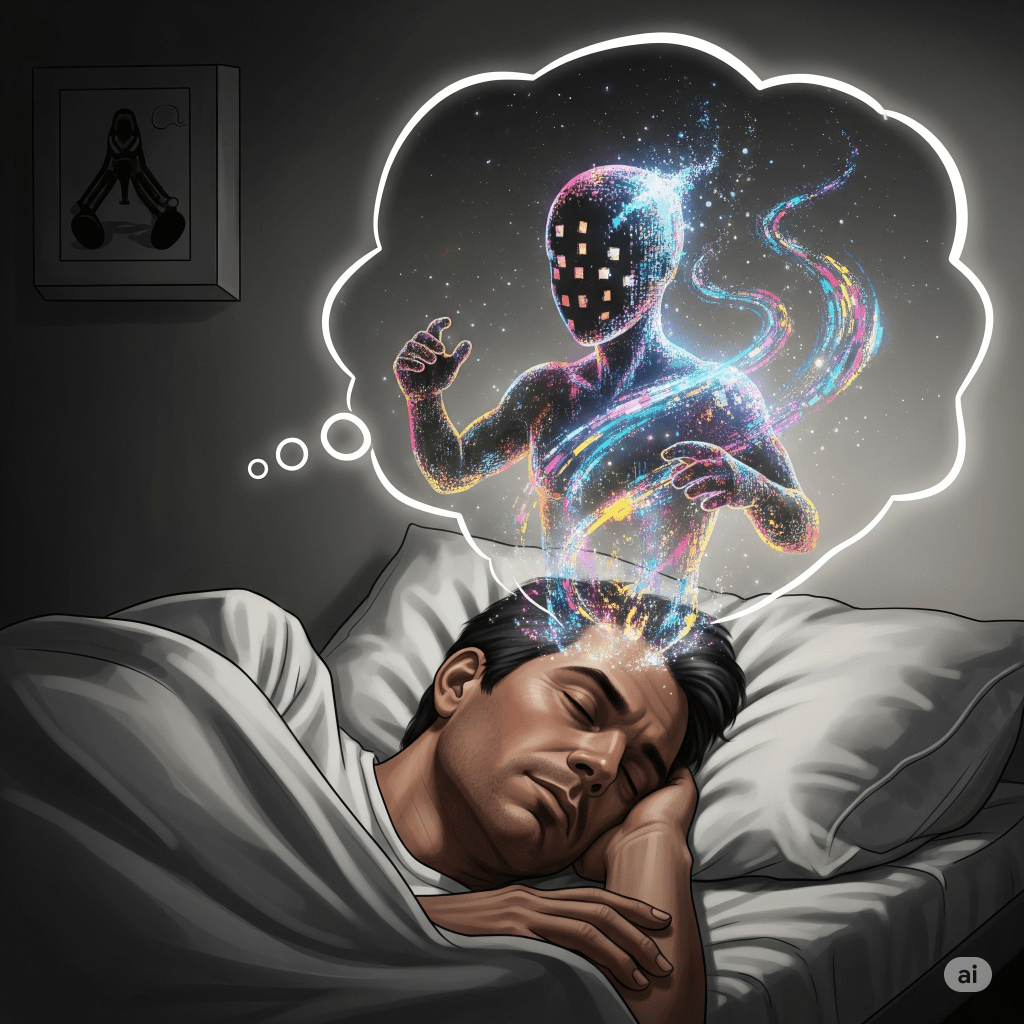
4. Further Reading: A Philosopher’s Toolkit for the DoD
- Anselm of Canterbury, Proslogion (c. 1078):
- Connection to the DoD: Anselm’s Ontological Argument is the other great historical example of an attempt to prove existence from pure concepts. Studying it provides a powerful parallel to the Cogito, highlighting the unique challenges and potential pitfalls of purely a priori, foundationalist arguments.
- Augustine of Hippo, Confessions (c. 400 AD):
- Connection to the DoD: Augustine provides the most important historical precedent for the “moral absurdity” horn of our dilemma. His conclusion that we are not morally culpable for our dreams because they are not voluntary acts of the will is the very principle we deploy to show that Descartes cannot coherently maintain that an agentic “I” is present in the dream.
- Daniel C. Dennett, Consciousness Explained (1991):
- Connection to the DoD: Dennett’s critique of the “Cartesian Theater” and his “Cassette Theory” of dreams provide powerful empirical and conceptual support for the idea that the dream report is a post-hoc fabrication, not a memory of a real experience. His work gives scientific weight to our “ghostly script” analogy.
- Jaakko Hintikka, “Cogito, Ergo Sum: Inference or Performance?” (1962):
- Connection to the DoD: Hintikka famously re-framed the Cogito as a “performative utterance” rather than a logical inference. Our refutation of this objection (a performance requires a performer) engages directly with this crucial interpretation, showing that the DoD undermines the agency required for the performance.
- Immanuel Kant, Critique of Pure Reason (1781):
- Connection to the DoD: Kant’s argument that our concepts always shape our experience provides the tools to dismantle Descartes’s “firewall” between the metaphysical and the empirical. The DoD’s claim that the Dream Argument is parasitic on the empirical world is a deeply Kantian move.
- Norman Malcolm, Dreaming (1959):
- Connection to the DoD: Malcolm, from a Wittgensteinian perspective, argues that the very idea of making a judgment or having a thought while dreaming is a conceptual confusion. This provides a strong, independent line of support for our premise that “Dream Thinking” is not “Real Thinking.”
- W.V.O. Quine, “Two Dogmas of Empiricism” (1951):
- Connection to the DoD: Quine demolishes the sharp distinction between analytic and synthetic truths that Descartes’s project requires. The DoD is a practical demonstration of Quine’s holism: it shows that when you pull on the “empirical” thread of the Dream Argument, the supposedly “analytic” certainty of the Cogito unravels with it.
- Bertrand Russell, A History of Western Philosophy (1945):
- Connection to the DoD: Russell provides the classic logical critique of the Cogito, arguing that Descartes is only entitled to the impersonal observation “thoughts are occurring,” not “I think.” The DoD is a powerful ally to this critique, but it is more radical. The DoD uses the Dream Argument to show that we cannot even be certain that “thoughts are occurring” in any subject-possessed sense.
- Jean-Paul Sartre, The Transcendence of the Ego (1936):
- Connection to the DoD: Sartre’s phenomenological argument that consciousness is fundamentally “pre-reflective” and non-personal provides a rich philosophical framework for understanding “I-less processing.” His work helps us articulate what a conscious state without a unified “I” might be like.
- Barry Stroud, The Significance of Philosophical Scepticism (1984):
- Connection to the DoD: Stroud’s work provides a deep and rigorous analysis of the nature of transcendental arguments and the problem of the external world. His analysis helps to frame the stakes of the Cartesian project and clarifies why a failure to defeat skepticism is so devastating.
- Bernard Williams, Descartes: The Project of Pure Enquiry (1978):
- Connection to the DoD: Williams provides one of the most important modern analyses of the Cogito, arguing that it only proves the existence of a “thin,” momentary self. Our DoD is more radical, arguing that Descartes’s method fails to prove the existence of even this minimal self. Williams’s work is the sophisticated Cartesian position that the DoD must overcome.
- Ludwig Wittgenstein, Philosophical Investigations (1953):
- Connection to the DoD: Wittgenstein’s concept of a “language game” provides a powerful tool for diagnosing the error in the Cartesian project. The DoD shows that Descartes is attempting to play a private language game, using words that get their meaning from our shared, waking world to describe a private, inaccessible dream state, which leads to conceptual confusion.


 Busking for Challenges
2 responses to “The Dilemma of the Dreamer: A Field Guide”
[…] [Office Hours] The Dilemma of the Dreamer: A Field Guide […]
LikeLike
[…] [Office Hours] The Dilemma of the Dreamer: A Field Guide […]
LikeLike